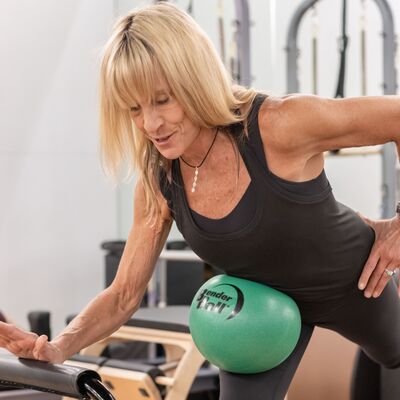
Your older adult clients want to feel strong, steady and confident in their bodies, and they want to get there without pain. The Bender Ball helps you deliver all three. It’s soft, light and forgiving, so it adds support where clients need it and challenge where they’re ready for it. Here are five ways to bring it into your active aging classes and sessions.
1Support the Spine During Core Work
Many older adults avoid traditional crunches because getting down to the floor and lifting the head feels hard on the neck and back. Placing the Bender Ball behind the lower back changes the experience. The ball gives the spine a supported curve to move over, so clients can find their abdominals without straining.
- Have clients sit with the ball behind the lower back and lean back slowly until they feel the abdominals engage.
- Keep the range small at first and cue a long exhale on the way back.
- Let the hands rest behind the head or on the thighs, whichever feels better for the neck.
2Bring the Workout to the Chair
Not every client can get up and down from the floor, and that shouldn’t keep them from quality core and posture work. The Bender Ball works beautifully in a chair, so seated participants get the same benefits as everyone else in the room.
- Place the ball between the knees and squeeze gently to wake up the inner thighs and deep core.
- Set the ball behind the mid-back and press into it to encourage tall, open posture.
- Hold the ball at the chest and rotate slowly side to side for gentle spinal mobility.
3Build Better Posture
Rounded shoulders and a forward head are common as we age, and they affect how people breathe, balance and move. The Bender Ball gives clients something to feel. A light squeeze or press tells the body exactly where to engage, which makes posture cues easier to understand than words alone.
- Press the ball gently between your palms and feel your shoulder blades settle down your back.
- Lean into the ball behind you and let your chest lift as you breathe in.
- Grow tall through the crown of your head while you keep that gentle squeeze.
A light squeeze tells the body exactly where to engage.
4Train Balance with Confidence
Balance training matters for older adults, and it works best when clients feel safe enough to try. The Bender Ball adds a simple focus point to standing work without adding risk. Keep a chair or wall close by and progress slowly.
- Stand tall holding the ball at the chest and shift the weight slowly from foot to foot.
- Hold the ball overhead with both hands to add a challenge for the core and upper back.
- Press the ball against a wall with one hand while lifting the opposite heel, then switch sides.
5Strengthen the Lower Body Safely
Strong legs and hips help clients climb stairs, get out of a chair and stay independent. The Bender Ball makes classic lower body moves more comfortable and more effective at the same time.
- Place the ball between the wall and the lower back for supported wall squats.
- Squeeze the ball between the knees during sit-to-stands from a chair.
- Use the ball between the knees during bridges to connect the glutes, inner thighs and core.
Small Ball, Big Confidence
The Bender Ball meets older adults where they are. It supports the spine, brings core work to the chair, sharpens posture, builds balance and strengthens the legs that keep clients moving through life. Most of all, it helps them feel successful in every class.
Leslee Bender created the Bender Ball, and she’ll teach you how to use it safely and effectively with every client you serve. Explore the Bender Ball Method certification.